
Ohio Statehouse 2026 Session Schedule: How to Track Legislation and Stay Informed
The 2026 session schedule for the Ohio Statehouse is now public on the Ohio General Assembly website. The first Senate floor session is not until January 28, while the first House session is not until February 18. Sessions are currently scheduled through June, though some are marked “if needed.” However, the schedule will shift as legislative priorities evolve.
🔎 A floor session is when the full chamber—all 33 senators or 99 House representatives—votes on legislation that has been passed by the lower committees.
These preliminary calendars give Ohio residents a useful roadmap to monitor when the legislature will be in session—important if you’re tracking a particular bill, committee activity, or want to tune into proceedings firsthand.
How YOU Can Track Legislation and Stay Informed
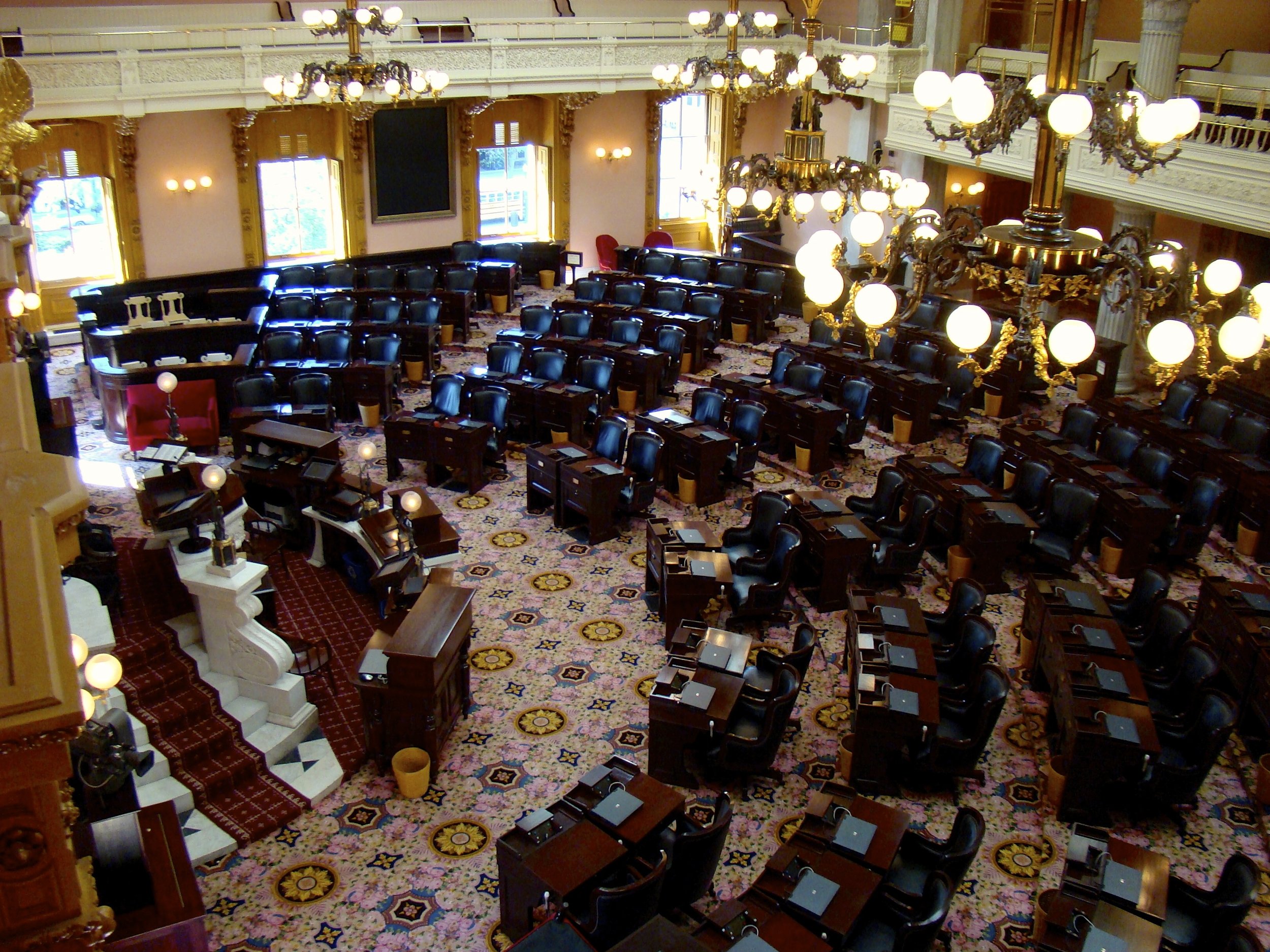
Ohio House Chamber photo: Bob Hall from Christchurch, New Zealand - Ohio Statehouse Uploaded by AlbertHerring
If you want to follow what’s happening at the Statehouse beyond the curated updates that Center for Christian Virtues provides, here are key public resources to use:
legislature.ohio.gov
This is the official site of the Ohio General Assembly, and it allows you to search for legislation, view session and committee schedules, review reports of the status of all bills and resolutions, read Ohio Laws, and browse directories of legislators and committees.
This website also offers My Ohio Legislature, a free, customizable dashboard where users can track legislation by bill number or subject, monitor committee activity, and receive once-daily email alerts summarizing legislative developments that match their interests.
You can also check out the Glossary to understand key words and phrases you might hear in public policy.
lsc.ohio.gov
The Ohio Legislative Service Commission (LSC) is a nonpartisan agency providing the Ohio General Assembly with drafting, research, budget and fiscal analysis for each bill, training, and other services.
ohiosenate.gov
This is the official site of the Ohio Senate and offers more detailed information about the Senate, including its history and the role of Senators. It also includes news from the Ohio Senate and a host of additional resources.
ohiohouse.gov
This is the official site of the Ohio House of Representatives and offers more detailed information about the House, including its history and the role of the Representatives. It also includes news from the Ohio House and a host of additional resources, including job and internship opportunities.
OhioChannel.org
The Ohio Channel provides gavel-to-gavel, unedited video coverage of official sessions of both chambers of the Ohio General Assembly, as well as coverage of Supreme Court oral arguments, Governor’s bill signings, news conferences, agency events, and more.
Newer television sets and those with digital antennas can pick up broadcasts of The Ohio Channel over the air. Many communities also broadcast The Ohio Channel on their government access cable channels. View the channel locator for a full list of broadcast areas and station numbers.
Websites for Statewide Offices & Agencies
For even more coverage and updates, you can visit the official ohio.gov website for every statewide elected office and a variety of agencies. A few key websites include:
Why This Matters
With the 2026 session calendar now out, Ohioans—citizens, reporters, advocates, and community organizations—have greater clarity about when the legislature will be active.
That schedule helps people plan:
to follow a bill they care about,
watch a hearing or floor debate, or
to engage in public comment or advocacy.
Moreover, the modern tools available—searchable legislation, status reports, email alerts, and live video streams—mean it has never been easier for ordinary citizens to monitor what happens in our state government. Whether you’re watching from home or taking a deep dive into a policy area, these resources help make government more transparent and accessible.
Real-world example: Governor DeWine Signs Bills, Vetoes one
Using these public resources, you can track not only legislative activity but also the Governor’s actions. This week, Governor Mike DeWine signed several bills into law and vetoed one
Governor DeWine signed the following bills into law:
Senate Bill 152, sponsored by State Senator Andrew O. Brenner (R-Delaware), amends sections 4729.01, 4729.36, 4729.531, 4729.532, 4729.54, and 4729.55 of the Revised Code to allow wild animal rehabilitation facilities to receive a limited license to administer euthanasia drugs and to modify the law regarding the use of terms that are limited to pharmacies and pharmacists.
House Bill 23, sponsored by State Representative Bill Roemer (R-Richfield) and State Representative Josh Williams (R-Sylvania Twp.), creates the escaped convict alert program and allows a prior parent company of a bank to apply to the Secretary of State for the appointment and commission of banking police officers.
House Bill 27, sponsored by State Representative Jamie Callender (R-Concord) and State Representative Daniel P. Troy (D-Willowick), designates the bridge spanning the Grand River in Lake County as the "Specialist Jacob A. Ashton Memorial Bridge" and makes changes to the "Juvenile Diabetes Research Foundation" license plate.
House Bill 38, sponsored by State Representative Sarah Fowler Arthur (R-Ashtabula), to designate a portion of State Route 87 in Geauga County as the "Dr. Steven Takacs Veteran Memorial Highway."
House Bill 56, sponsored by State Representative Sharon A. Ray (R-Wadsworth), designates a portion of State Route 421 in Medina County as the "CPL David James Amheiser Memorial Highway."
Senate Bill 155, sponsored by State Senator Andrew O. Brenner (R-Delaware) and State Senator Catherine D. Ingram (D-Cincinnati), amends sections 4735.18 and 4735.24 and enacts section 5301.95 of the Revised Code to amend the law related to real estate wholesalers.
Ohio Governor Mike DeWine vetoed the following bill:
Senate Bill 50, to amend sections 3331.02 and 4109.07 of the Revised Code regarding age and schooling certificate requirements and work hours for a person under sixteen years of age. Read the governor's signed veto message.
The legislative process can feel complex, but these tools make it easier than ever for Ohioans to stay engaged. Whether you’re following a single bill or trying to understand the broader direction of state policy, these resources help bring transparency to the work happening in your state government.
For public policy alerts on the most important bills that impact Christians, join CCV’s mailing list at CCV.org/Join.
For more information, contact CCV at 513-733-5775 or contact@ccv.org. For media inquiries, email media@ccv.org.
As Ohio's largest Christian public policy organization, Center for Christian Virtue seeks the good of our neighbors by advocating for public policy that reflects the truth of the Gospel.
###