Why School Choice Is the Culture-Shaping Strategy of Our Time
The growing controversy around school choice in Ohio makes it clear that this issue is, in fact, a battle for the paideia of the next generation.
What is the paideia?
In Christian classical tradition, paideia refers to the total upbringing and education of a child. It ultimately means shaping the soul, the character, and the worldview of the next generation.
This concept is a driving force behind the new National School Choice Tax Credit.
What is this credit?
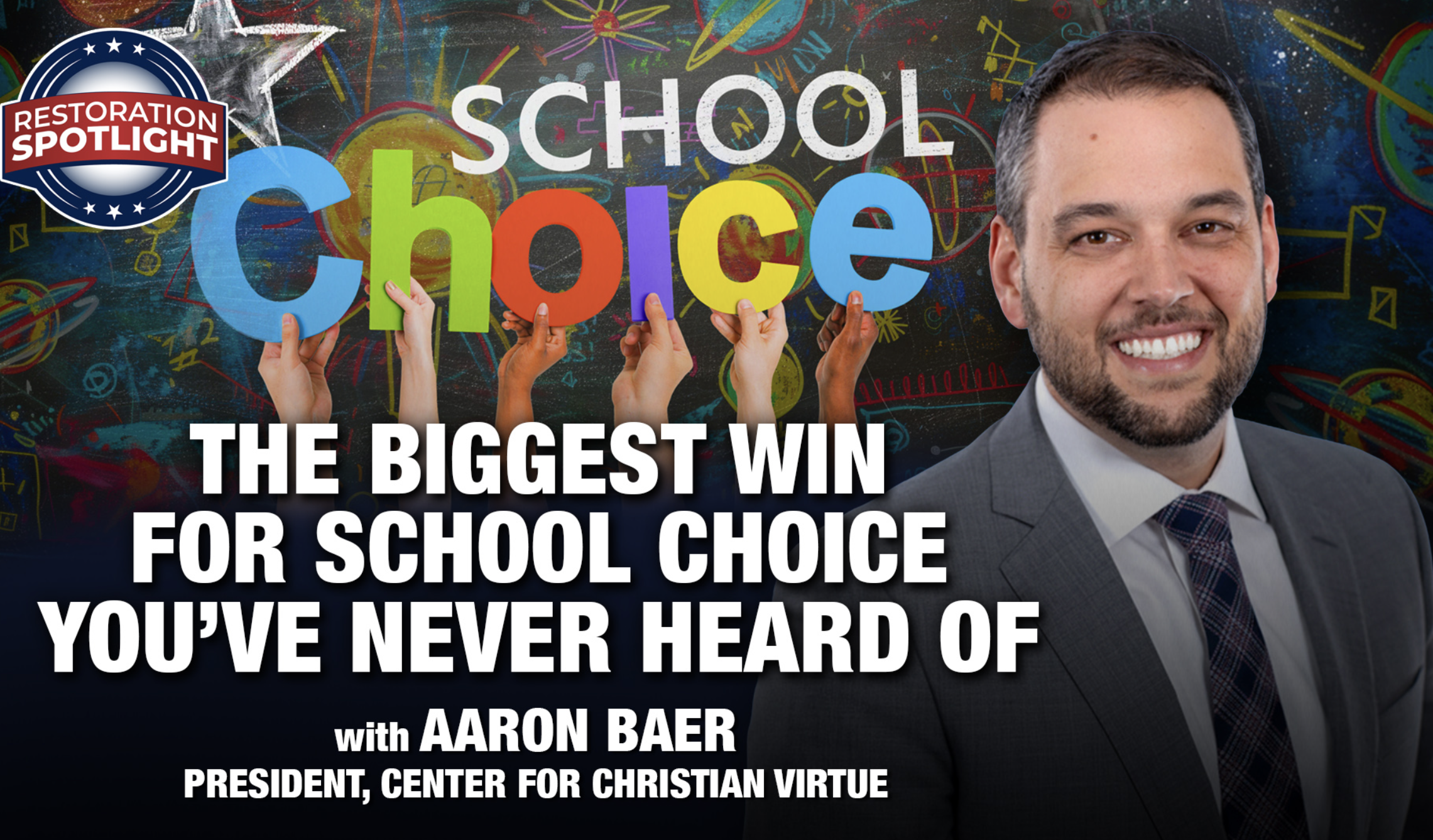
In a recent episode of the Restoration Spotlight podcast, Hayden Ludwig and CCV President Aaron Baer get into the details. Ludwig notes that President Trump’s “One Big Beautiful Bill” has provided this credit as a “secret weapon” to reclaim the educational foundations of the country.
As Baer explains, “This is the biggest evangelism opportunity in American history, and our best shot to ever fix education in America.” Although it is a long-haul strategy, this credit is designed so that the “shaping” of a child’s soul remains in the hands of the family and the church rather than the state.
Christian Education is a Solution, Not a Supplement
Troy McIntosh, Executive Director of the Ohio Christian Education Network (OCEN), has spent decades in Christian education as a teacher, principal, and administrator. Now, he is a leading advocate for educational freedom. McIntosh’s work illustrates that the push for school choice isn’t merely a reaction to failed public schools. Instead, it’s a proactive strategy to ensure families have genuine alternatives rooted in a Christian understanding of learning and life.
Reflecting on the work OCEN does in Ohio, McIntosh underscores this deeper mission:
“The whole point of a Christian education is to lead a student to a deeper and greater love for God Himself… every area of the universe is open to our study, because all of those things are filled with God’s presence. By learning math or the water cycle or history, the student begins to reflect Christ’s character more—because those are things He already knows.”
For McIntosh, Christian education is not merely an academic alternative. It is about a child’s formation, about discipling students in every subject through the lens of Christ’s sovereignty over all truth. That mission aligns directly with the ancient concept of paideia, where education is about forming the whole person: heart, mind, and soul.
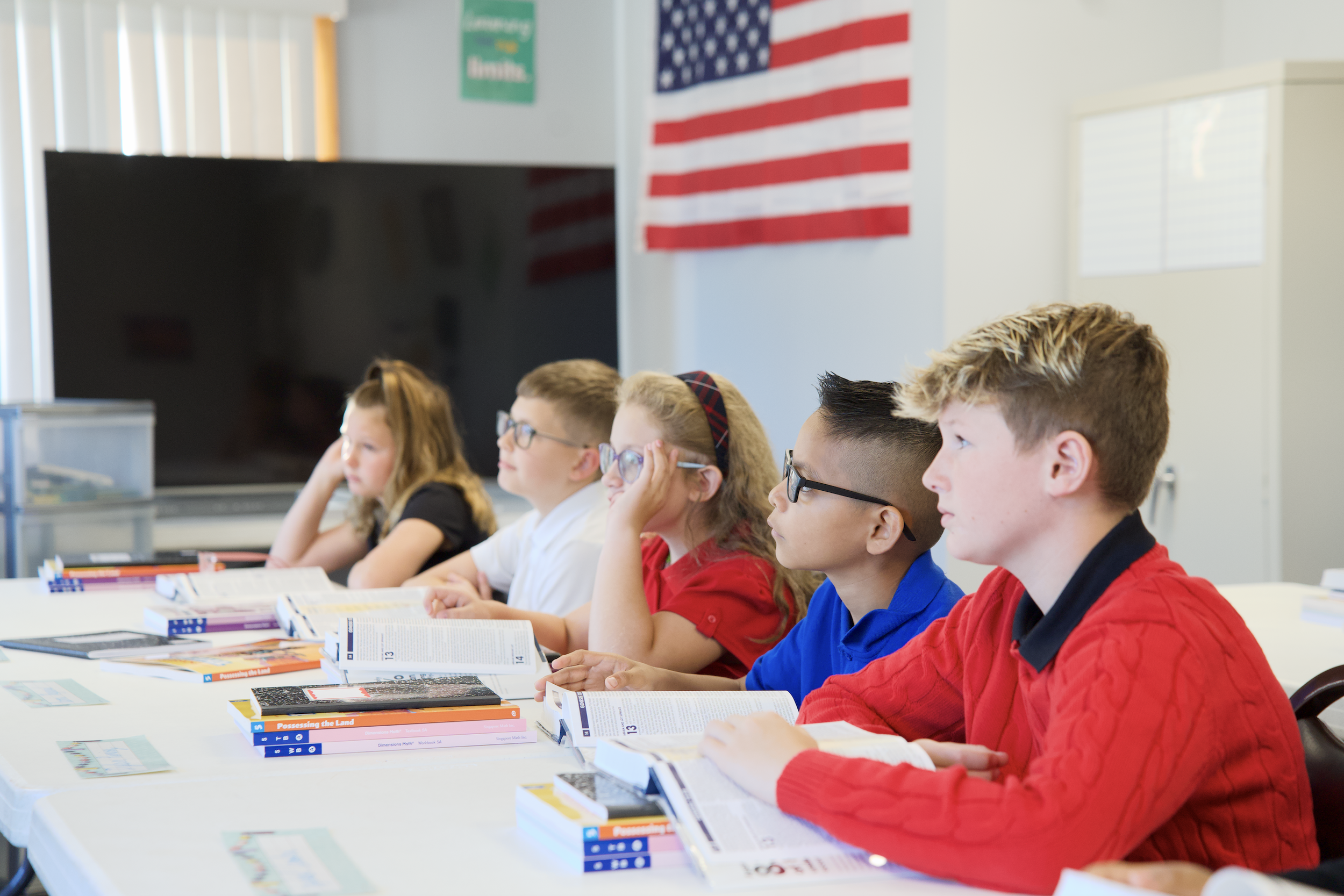
Students at Rhema Academy, a biblically based and Christ-centered school in Marion, Ohio, listen attentively during their first day of class.
Defunding the “Clutches of the Left” Through Strategic Choice Policy
In the Restoration Spotlight interview, Baer argues that the school board strategy has been a losing battle for half a century because it attempts to fix a system that is fundamentally designed for a different kind of paideia:
“The school districts aren't actually run by the school boards; they’re run by the Marxist teachers and teachers' unions… The predominant pedagogy is to teach teachers to explain the world through a critical theory lens.”
This critique resonates with school choice advocates like McIntosh, who view expanded choice as essential not only for quality education but for freedom of conscience and religious expression.
In public statements criticizing legal threats to school choice programs, McIntosh has strongly defended parental and family decision-making.
And in broader debates over funding and accountability, McIntosh pushes back against critics who say vouchers merely subsidize private schooling at the expense of public systems:
“So what? You know, these are citizens of Ohio who are every bit the taxpayer that someone who attends a public school is. And so why shouldn’t the state be funding those children?”
Here McIntosh articulates a philosophical foundation for school choice: education funding should follow the learner, rather than lock families into one system.
How the Federal Tax Credit Works
The National School Choice Tax Credit, set to go live on January 1, 2027, offers a dollar-for-dollar credit, not a deduction, allowing families to directly choose where their tax dollars go.
The Contribution: An individual household can make a donation (likely up to $3,400) to a certified Scholarship Granting Organization (SGO).
The Reward: The IRS provides a 100% tax credit back to the family.
The Impact: Funds that would have gone into the federal general fund are instead used to provide scholarships for kids to attend private Christian schools.
This mechanism empowers parents to invest in an education that aligns with their deepest convictions, thereby fueling a system in which education reflects Christian truth rather than secular orthodoxy.
Growing a Competitive Educational Marketplace
Critics often highlight the challenges within public education: low proficiency rates, administrative inefficiencies, and bureaucratic inertia. School choice advocates see clearly that innovation and competition are the antidote.
McIntosh argues that broad choice initiatives help families find schools that fit their child while forcing all educational institutions to respond to real parental demand.
As Baer shared with Ludwig,
“When public schools fail, they get more money. When private schools fail, they shut down. When a business is failing, it shuts down, right? When public schools fail, they get more money… We have some schools here that have a 6% passage rate on the third-grade reading proficiency test, yet they're getting $25,000 per kid. It's absolutely unsustainable, and this [tax credit] is the opportunity for us to actually do something about it.”
In Ohio, OCEN has also worked with communities to launch new Christian schools, expanding options where families previously had none. McIntosh notes that churches and local leaders, once they are supported in opening schools, experience not just academic success but community transformation.
The aim of OCEN, and more broadly of the recently launched Christian Education Network, is to give families the freedom to choose education that equips children spiritually and intellectually, in alignment with a biblical worldview.
This mission, grounded in a realistic understanding of the necessity of a biblical paideia, reframes education from a public service to a cultural foundation. This is a movement set to shape citizens, communities, and ultimately the future of our nation.