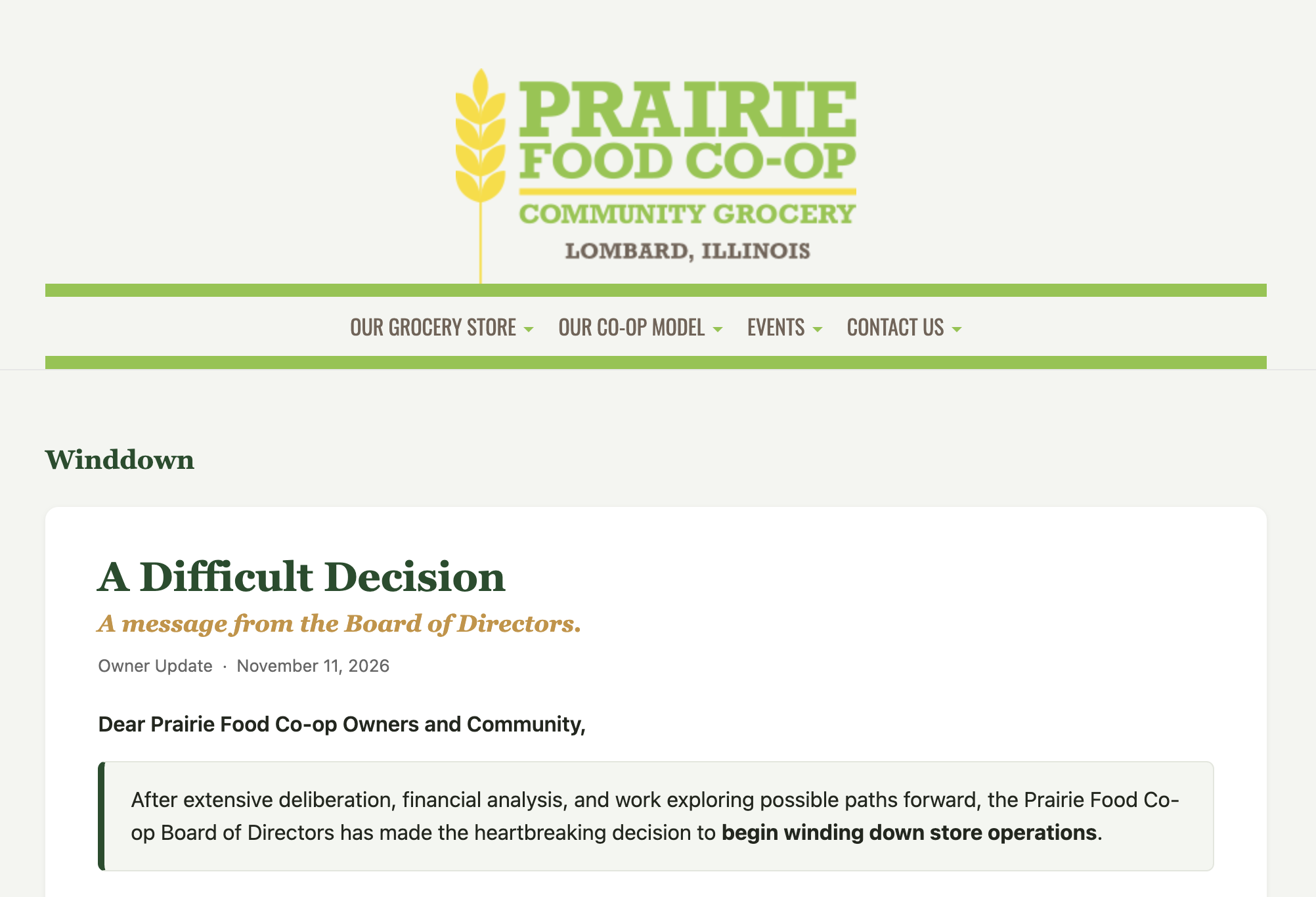
Prairie Food Co-Op in Lombard, Illinois, shut down on November 15 after falling far short of its revenue target. The store opened in July 2025 after at least three years of planning and construction, needing about $4.1 million in annual revenue to survive. Instead, it brought in roughly $2 million.
The store had 2,400 residents described as “co-owners” who bought shares totaling about $500,000. In 2022, Illinois Gov. J.B. Pritzker’s infrastructure plan directed more than $800,000 to the store, and Rep. Sean Casten secured nearly the same amount in additional federal funding for construction and setup. Yet in its wind-down letter, the board admitted customer surveys showed the store fell short on competitive pricing, produce, and everyday groceries, and that lenders said a turnaround would require at least $500,000 more amid unpaid rent.
The closure comes as New York City Mayor Zohran Mamdani pushes forward with a pilot program to open five city-owned grocery stores—one in each borough—promising prices up to 30% lower on core healthy foods. That initiative has already drawn pushback from local business groups, including an August lawsuit challenging the city-run model.
Prairie Food Co-Op joins other publicly backed grocery experiments in Kansas City and near Jacksonville, Florida, that have struggled or shuttered under the razor-thin margins of grocery retail. While expanding access to affordable food is a pressing goal, Lombard’s rapid wind-down highlights an inconvenient reality for socialist lawmakers pushing government-backed stores: public subsidies can cover startup costs, but a grocery store still depends on free-market fundamentals—competitive pricing, selection, and everyday foot traffic—to survive once the doors open.