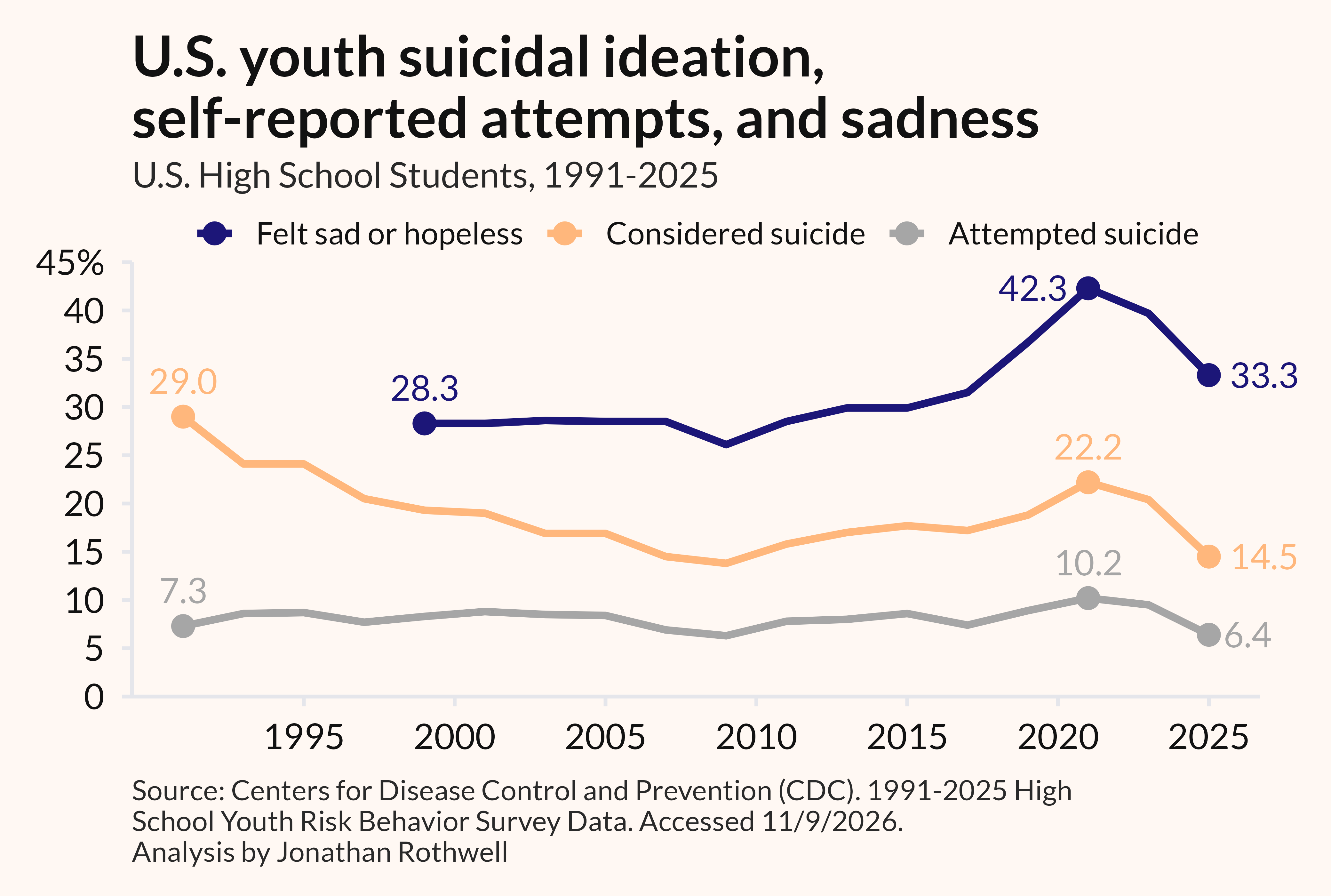
Youth mental health struggles have not disappeared, but several national measures have moved in a healthier direction since 2021. CDC survey data from US high school students show the share reporting persistent sadness or hopelessness—severe enough to stop usual activities for at least two straight weeks—fell from 42.3% in 2021 to 33.3% in 2025.
The same survey found that reported suicide attempts dropped from 10.2% in 2021 to 6.4% in 2025, while serious consideration of suicide fell from 22.2% to 14.5%. Both figures now sit below their post-1991 averages after years of rising concern before and during the pandemic.
Hospital records reflect a similar shift. Among 15-to-19-year-olds, hospitalizations for intentional self-harm surged 90% from 2009 to 2021 before declining 11% through 2025. Still, adolescent suicide remains a serious concern, with provisional 2025 rates roughly double those of the 1960s.
The research also points beyond medical spending—noting that depression rates did not vary between uninsured youth and those on private or public coverage. Instead, SAMHSA data from 2021 to 2024 show youth major depression fell as teen religiosity rose. Religious youth reported lower rates of anxiety, depression, and suicidality, and were more likely to have parents who set limits, restricted electronics, required chores, and offered encouragement.